

Introduction: Not Every Windshield Crack Is Created Equal
Pull into any busy intersection in Vancouver — whether it’s along the congested stretch of Kingsway, the gravel-heavy routes near the Port, or the fast-moving lanes of Highway 1 — and you’re never far from a flying piece of road debris. Rock chips, gravel strikes, and sudden temperature swings are everyday realities for BC drivers. And when damage hits, the first question almost every driver asks is the same: Can this be repaired, or do I need a full replacement?
The answer is not as simple as “big crack equals replacement, small chip equals repair.” In reality, understanding the types of windshield cracks in Vancouver means looking at four key factors: the type of damage, its size, its location on the glass, and its depth through the laminate layers. A crack that looks minor in one location might be unrepairable, while a more dramatic-looking break in a different spot could be professionally fixed in under 30 minutes.
This in-depth guide covers every major type of windshield crack and chip, explains exactly which ones qualify for professional windshield crack repair in Vancouver, which ones require full replacement, and what the decision-making criteria are so you can walk into any auto glass shop — or pick up the phone — with full confidence.
If you have a crack right now, do not wait to read this. Vancouver’s rainy climate, overnight temperature drops, and rough road surfaces are working against you every hour that chip or crack sits untreated.
Understanding How Your Windshield Is Built
Before diving into the specific types of windshield cracks in Vancouver and whether they’re repairable, it helps to understand what your windshield is actually made of — because the structure of the glass determines what can and cannot be fixed.
Modern vehicle windshields are laminated safety glass, constructed from three layers:
- Outer glass layer — the surface that faces the road and absorbs initial impact from debris
- PVB (polyvinyl butyral) interlayer — a clear plastic film sandwiched between the two glass layers that holds the windshield together upon impact, preventing it from shattering into sharp shards
- Inner glass layer — the surface facing the vehicle interior
When a rock strikes your windshield, it typically damages the outer glass layer first. Whether that damage is repairable depends heavily on whether it has penetrated through to the PVB interlayer or inner glass. Damage confined to the outer layer is almost always a candidate for windshield chip repair in Vancouver BC. Damage that has punched through the interlayer usually means replacement is the only safe option.
With that foundation in mind, let’s break down every type of windshield crack you’re likely to encounter on BC roads.
Types of Windshield Cracks in Vancouver That CAN Be Repaired
1. Bullseye Crack
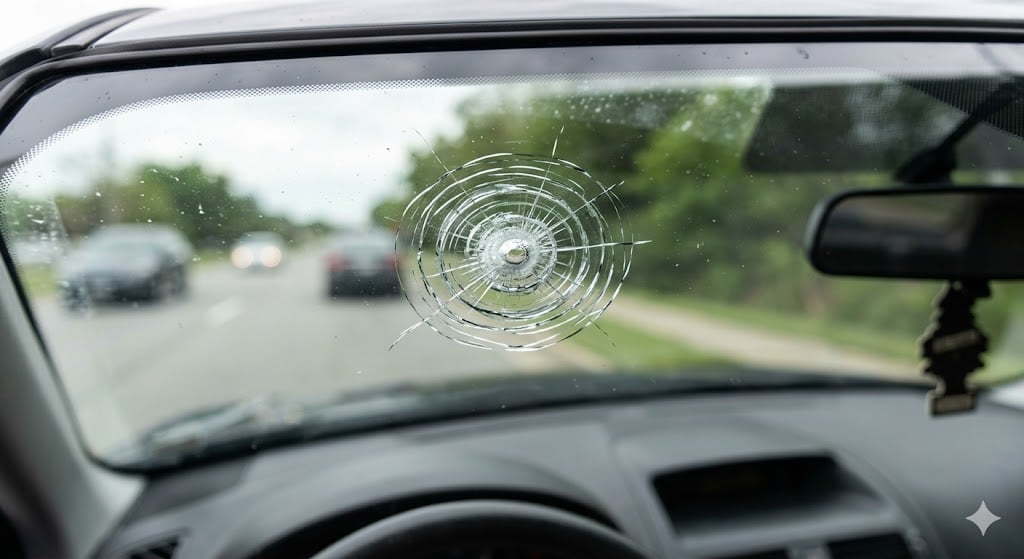
What it looks like: A circular break with a clearly defined impact point at the centre, resembling a dartboard bullseye or a target ring. A chunk of the outer glass layer is typically displaced or partially missing at the centre, surrounded by a clean circular fracture line.
What causes it: A direct, perpendicular hit from a rounded piece of road debris — most commonly a stone or pebble thrown up by a vehicle in front of you. These are extremely common on BC’s highway network, particularly behind gravel trucks and on construction corridors around Metro Vancouver.
Can a bullseye crack be repaired in Vancouver? In most cases, yes — and it’s one of the more straightforward repairs an auto glass technician performs. The circular shape means the damage is self-contained, and professional-grade resin can be injected cleanly into the cavity using a vacuum injector. The repair restores structural integrity and, for smaller bullseye breaks, produces a nearly invisible result.
Repair criteria:
- Diameter of 25mm or less (roughly the size of a $2 coin)
- Located outside the driver’s primary line of sight
- Has not penetrated the PVB interlayer
- No contamination from dirt, moisture, or cleaning fluids inside the break
When it needs replacement: A bullseye wider than 25mm, one with deep inner layer penetration, or one sitting directly in the driver’s sightline may require windshield replacement rather than repair.
2. Half-Moon Crack (Partial Bullseye)
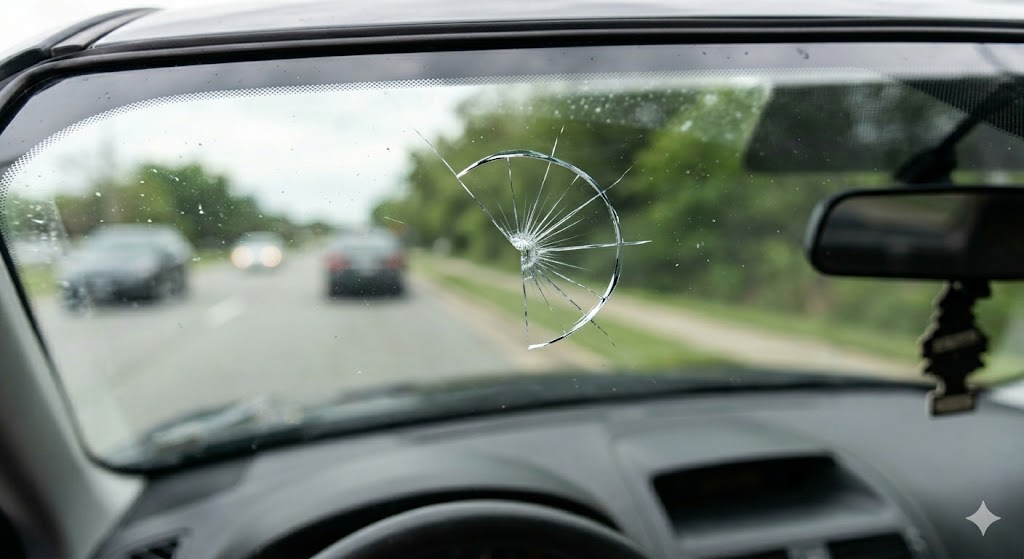
What it looks like: Very similar to a bullseye crack, except the circular fracture is incomplete — forming a half-circle or crescent shape rather than a complete ring. This happens when the striking debris hits the glass at a slight angle rather than perfectly straight on.
What causes it: Off-centre rock strikes, side-angle debris impact, or objects that graze the glass rather than hitting it squarely.
Is it repairable? Half-moon cracks are among the most favourable types of windshield damage for repair. Because the break pattern is less complex than a full bullseye, resin flows into the crack cavity easily and cures with excellent clarity. Technicians performing windshield crack repair in Vancouver typically report cleaner cosmetic results from half-moon repairs than most other crack types.
Repair criteria: Same size and location thresholds as a bullseye — under 25mm and outside the primary sightline.
3. Star Break
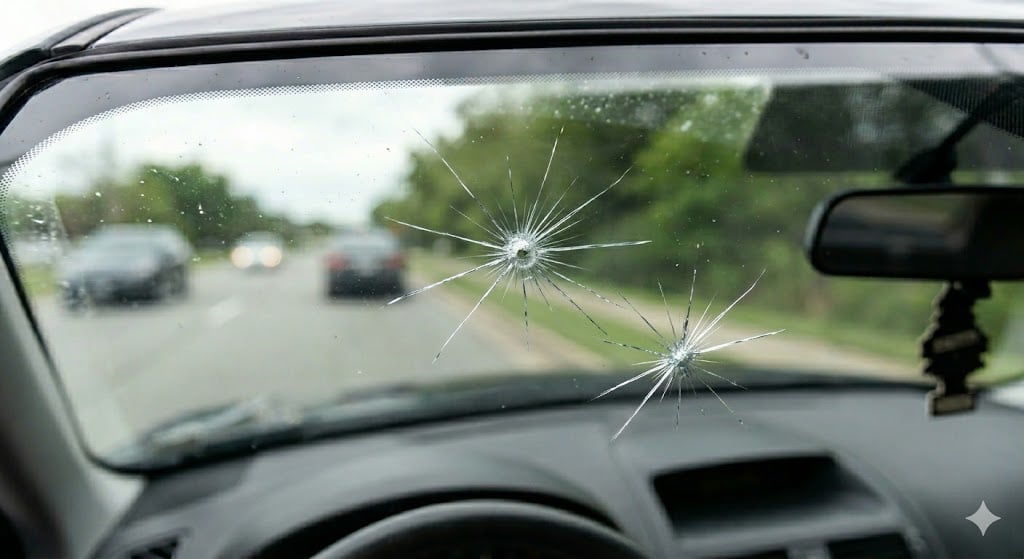
What it looks like: A central impact point with multiple short crack legs radiating outward in different directions, resembling a star or asterisk. Each “leg” is a separate fracture line extending from the centre, and some star breaks have three to six or more individual legs depending on the force of impact.
What causes it: High-velocity impact from sharp or irregularly shaped debris — often gravel, road aggregate, or small stones travelling at speed. Star breaks are common on BC provincial highways and on streets near active construction sites in Vancouver.
Can a star crack be repaired on a windshield in Vancouver? Yes, but with conditions. Star breaks are more complex to repair than bullseyes because the resin must be worked individually into each crack leg, not just a single cavity. This requires specialized injector tools and a technician experienced in multi-leg repairs. When done correctly, the result is a stable, sealed break that will not spread.
Repair criteria:
- Total diameter of the break (tip of one leg to tip of the opposite leg) under 40mm
- No individual crack leg longer than 25mm
- Located outside the driver’s primary sightline
- No penetration of the inner laminate layer
When it needs replacement: Larger star breaks with long, branching legs — particularly those in or near the driver’s direct line of sight — are better candidates for full replacement, as resin results in this zone can create light distortion that interferes with safe driving.
4. Crack Chip (Ding)
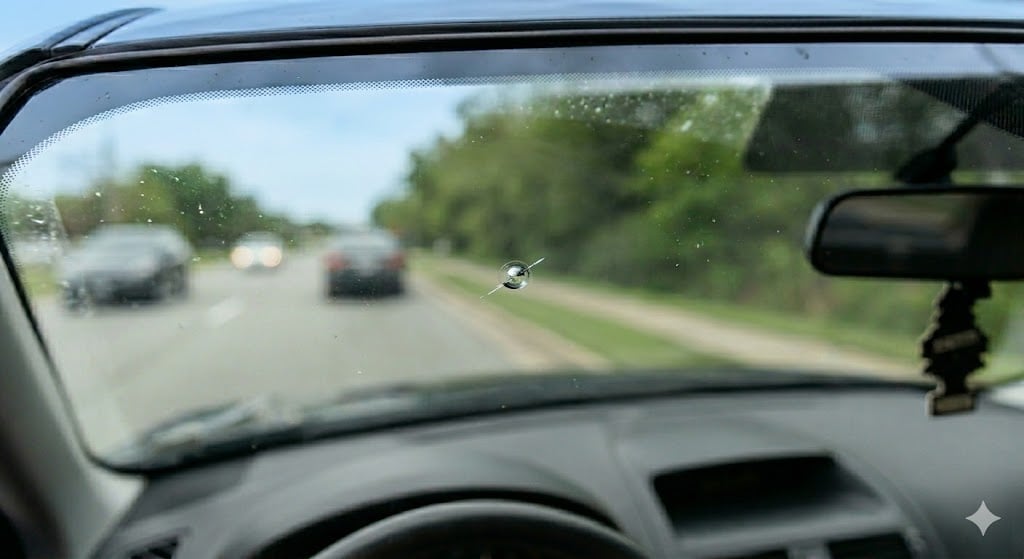
What it looks like: A very small impact point, often no larger than a fingernail, without any significant crack lines extending from it. Also called a “pit” or “ding,” this is the most minor form of windshield chip — sometimes barely noticeable until sunlight hits it at the right angle.
What causes it: Small debris travelling at relatively low velocity, surface pitting from road grit, or minor hail impacts. On Vancouver’s urban roads, these are often caused by small stones flicked up by cyclists, vehicles in adjacent lanes, or debris on surface streets.
Is it repairable? Crack chips and dings are the easiest and fastest of all windshield crack types in Vancouver to repair. A skilled technician can typically complete a ding repair in 15–20 minutes, and the cosmetic result is often near-perfect. The resin fills the small void completely, and after polishing, the impact point is very difficult to detect.
Repair criteria: Diameter under 12mm, no crack legs extending from the impact point, and confined to the outer glass layer.
5. Small Floater Crack
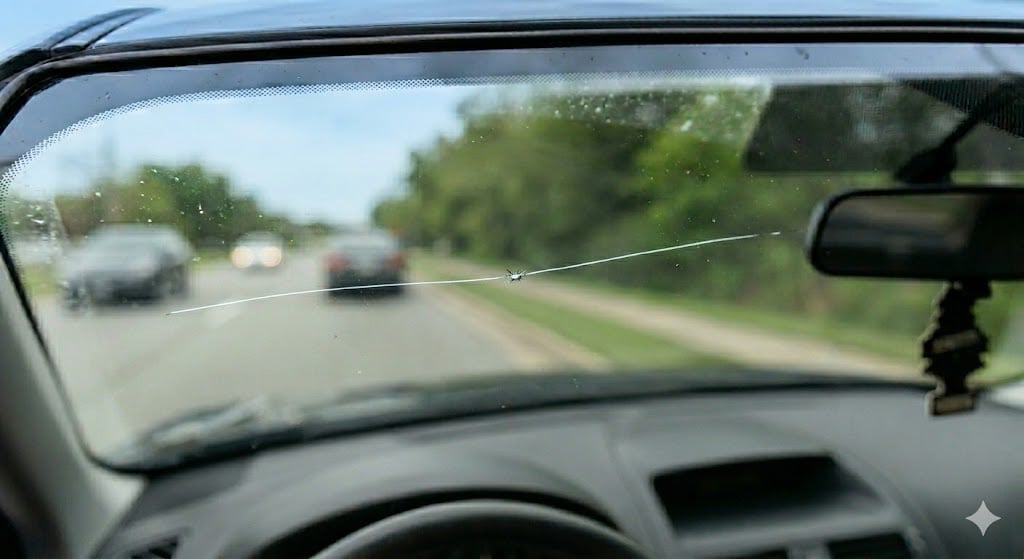
What it looks like: A crack line that begins in the middle of the windshield — defined as starting more than 50mm (2 inches) from any edge of the glass. Floater cracks vary in appearance from a short, clean line to a slightly wandering fracture. Smaller floater cracks that haven’t yet spread are a different repair situation than long, branching ones.
What causes it: Rock chip impacts that crack outward rather than forming a bullseye, thermal stress from rapid temperature changes (very relevant to Vancouver’s weather patterns), or vibration stress from road conditions.
Can a floater crack be repaired in Vancouver? Small floater cracks — typically those under 100–150mm (about 4–6 inches) in length — are often repairable with professional windshield crack repair techniques. Because they originate away from the structurally vulnerable edge of the glass, they don’t carry the same immediate spreading risk as edge cracks.
Important Vancouver note: Floater cracks are particularly sensitive to temperature changes. Vancouver’s pattern of warm afternoons followed by cold, wet overnight conditions is well known among local auto glass technicians as a major driver of floater crack growth. A floater crack that is repairable today may spread beyond repair limits overnight during a cold snap in November or March. Acting quickly is especially critical.
Repair criteria: Under 150mm in length, no branching, outside the primary sightline, no edge contact.
Types of Windshield Cracks in Vancouver That CANNOT Be Repaired
6. Edge Crack
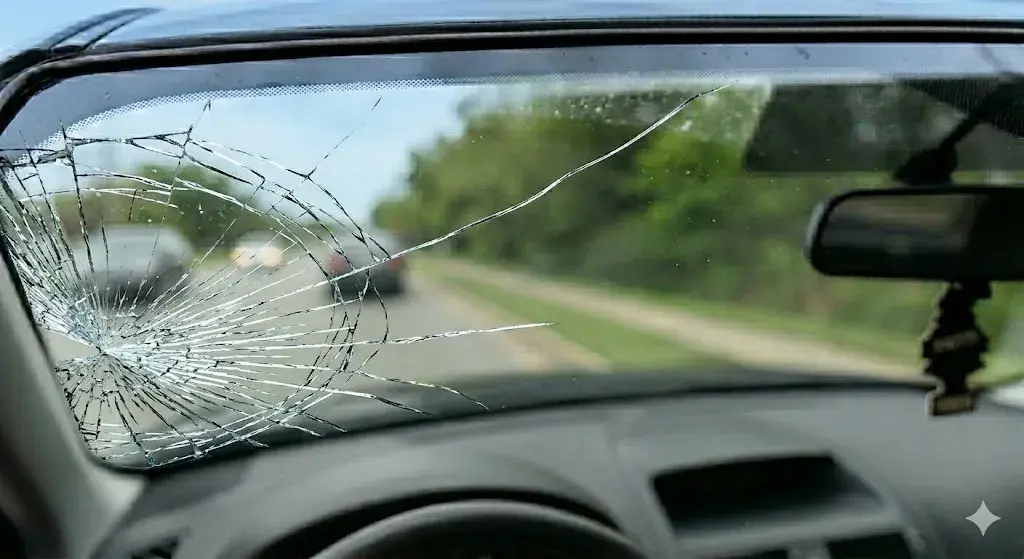
What it looks like: A crack that begins within 50mm (2 inches) of the windshield’s outer edge, or one that runs all the way to the edge. Edge cracks are typically long — often 100–300mm — and form quickly, sometimes reaching full length within minutes of impact.
What causes it: Road debris striking near the perimeter of the glass, physical pressure on the windshield frame during a door slam or vehicle flex, or an improperly seated windshield seal that allows stress to concentrate at the edges.
Can an edge crack be repaired on a windshield in Vancouver? This is one of the most searched windshield crack types in BC for good reason. The honest answer is: in most cases, no — or at least not in a way that is structurally reliable.
Here’s why edge cracks are so problematic: The edge of the windshield is bonded to the vehicle frame with urethane adhesive and is part of the structural seal that keeps the windshield in place. When a crack reaches the edge, it compromises this seal. Resin cannot create a bond as strong as the original glass structure at the edge, and the crack is highly likely to spread again under normal driving stress. Additionally, edge cracks often run beyond the 150mm repairability threshold within hours of forming.
In the vast majority of cases, a windshield with an edge crack requires full replacement. This is one of the windshield crack types in Vancouver where waiting will only increase the risk of sudden failure — particularly during hard braking, a bump, or even just closing the car door firmly.
7. Long Crack
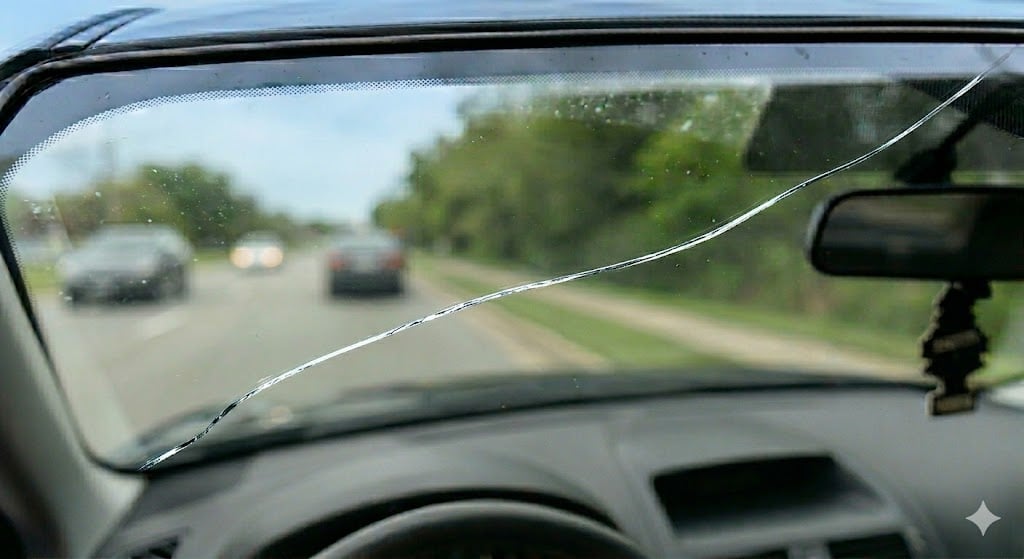
What it looks like: Any crack that extends beyond 150mm (6 inches) in length, running across a significant portion of the windshield face. Long cracks may be relatively straight or may curve and branch as they spread. They can originate from an unrepaired chip that was left to grow, or appear suddenly from a significant impact.
How long can a windshield crack be before replacement in BC? The industry standard threshold is 150mm (6 inches). Beyond this length, the structural compromise to the glass is too extensive for resin repair to restore adequate strength. Some advanced repair systems claim to handle cracks up to 300mm, but the safety and cosmetic results at those lengths are inconsistent, and most certified auto glass shops in BC will recommend replacement for any crack over 150mm as a matter of safety best practice.
Why it can’t be repaired: Resin injection works by filling a void and bonding the glass together. Over a long crack, the adhesion forces are spread too thin to prevent the crack from re-opening under driving stress, especially given the constant vibration and thermal expansion and contraction that every windshield experiences.
Vancouver-specific factor: Vancouver’s pothole-heavy roads — particularly after winter — mean your windshield is under constant vibration stress. A long crack in a Vancouver-driven vehicle is under more day-to-day stress than the same crack on a smoothly maintained road, making replacement the only safe route.
8. Stress Crack
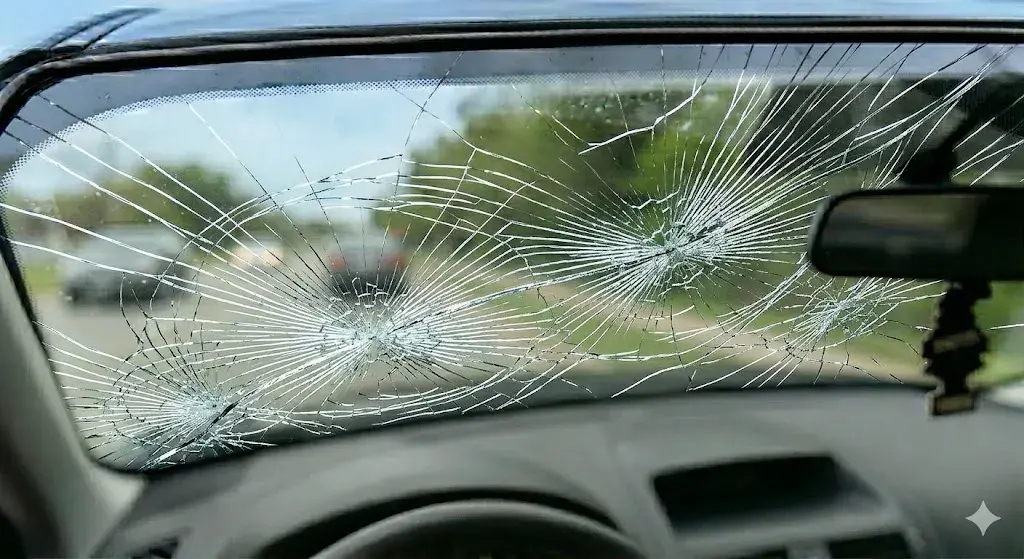
What it looks like: A crack that appears without any visible impact point — no chip, no star, no ding. Stress cracks are thin, smooth fracture lines that seem to appear “from nowhere,” often overnight or after a significant temperature change. They typically run from an edge inward or appear as curved lines across the glass face.
What causes stress cracks in windshields? Unlike impact cracks, stress cracks are caused by thermal or physical pressure within the glass itself:
- Rapid temperature changes: Pouring hot water on a frozen windshield is one of the most common causes in BC winters. The outer glass surface expands suddenly while the inner surface remains cold, and the stress splits the glass.
- Extreme sun exposure: Parking in direct sun on a hot Vancouver summer afternoon can cause the centre of the glass to expand while the edges — held firmly by the frame — cannot flex, creating internal stress.
- Defective installation: A windshield installed with excessive frame pressure or without proper edge clearance will develop stress cracks as the glass tries to flex during normal driving.
- Pre-existing micro-damage: A very small, invisible surface pit can become the nucleation point for a stress crack under temperature stress.
Is windshield stress crack repair in Vancouver possible? Unfortunately, no. Because stress cracks have no impact cavity to fill with resin, the standard chip repair process simply cannot be applied. There is nothing to inject resin into — the crack is a pure fracture line with no void. Replacement is the only solution for a stress crack.
9. Combination Crack
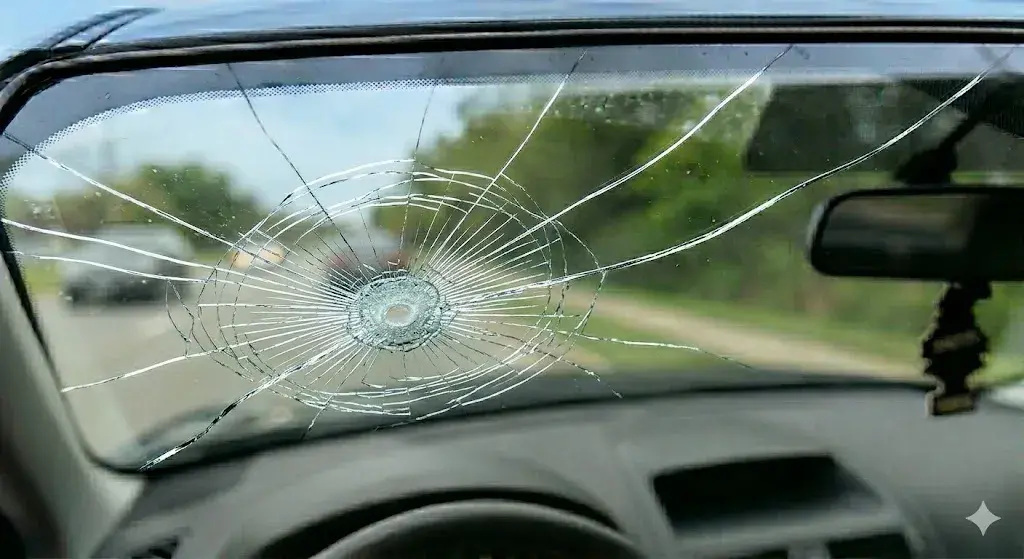
What it looks like: Exactly as the name implies — a combination crack is an impact point that shows multiple types of damage simultaneously. Typically, this means a bullseye or star break at the centre with crack lines extending outward from it, or a chip with multiple branching fractures radiating in different directions. The damage area can appear complex and visually confusing.
What causes it: High-velocity impacts from large or irregularly shaped debris. A large stone at highway speed, a chunk of aggregate from a gravel truck, or significant hail can all produce combination breaks.
Is a combination crack repairable? It depends on the size and location. Smaller combination breaks under 40mm in total diameter that fall outside the driver’s sightline may be repairable by an experienced technician using multiple injection steps. However, combination cracks in or near the driver’s line of sight should be treated as non-repairable, even if the physical size technically falls within repair limits.
The reason is that combination breaks involve both circular and linear fractures. Resin fills voids but cannot perfectly eliminate optical distortion across a complex multi-type fracture pattern. In the driver’s primary sightline, even a slight haze or distortion from the repaired area can create dangerous visual interference — particularly in low-sun conditions common during Vancouver’s long autumn and winter seasons.
Verdict: When combination crack windshield repair or replacement is the question, location is the deciding factor. Outside the sightline and under 40mm — possible. Inside the sightline or over 40mm — replace.
The Four Criteria Every Technician Uses to Assess Windshield Damage
Whether you’re dealing with a rock chip on a Surrey backroad or assessing windshield damage in Vancouver after a hailstorm, every certified auto glass technician uses the same four-point framework during a windshield crack assessment in Vancouver:
1. Size
The maximum repairable chip diameter is approximately 25mm. The maximum repairable crack length is approximately 150mm. Beyond these thresholds, replacement is typically required. How big a crack can be repaired on a windshield depends on this size threshold above all else.
2. Location
Does crack location affect windshield repair in Vancouver? Absolutely — it may be the most important factor of all. There are three critical location zones:
- Driver’s primary sightline (the area directly in the driver’s line of vision while looking straight ahead): Damage here is generally non-repairable, as even a technically successful repair may leave optical distortion.
- Within 50mm of the windshield edge: Almost always requires replacement due to seal integrity concerns.
- Centre zone, outside the sightline: Most repairable damage falls here.
3. Depth
Has the damage penetrated through the outer glass layer into the PVB interlayer? Run your fingernail gently across the inside of the windshield directly behind the damage. If you can feel the crack from the inside, the inner glass layer is compromised — replacement is required.
4. Age and Contamination
How long has the damage been there? Windshield crack repair in Vancouver is most effective on fresh damage. Over time, moisture, road grime, cleaning fluids, and atmospheric debris infiltrate the crack, contaminating the void that the resin needs to fill cleanly. A chip repaired within 24–48 hours of occurring typically produces a much cleaner cosmetic result than one that has been exposed to Vancouver’s rainy weather for a week or more.
Rock Chip vs Crack Windshield: What’s the Difference in Vancouver?
Many drivers use “chip” and “crack” interchangeably, but they are technically different damage types — and the distinction matters for repairability. Understanding the rock chip vs crack windshield distinction in Vancouver helps you describe your damage accurately when calling for a repair assessment.
A chip (also called a rock chip or stone break) refers to damage where a piece of the outer glass layer is displaced or missing at the impact point. The damage is primarily concentrated at a small area — a bullseye, half-moon, star break, or ding are all chips.
A crack refers to a fracture line — a split in the glass that extends beyond the immediate impact point. Cracks may originate from an untreated chip, from thermal stress, or from direct impact that produces a fracture rather than a concave break.
The key practical difference: chips are almost always repairable if caught early. Cracks require assessment of length and location before a repair or replacement recommendation can be made. When you call for a windshield crack assessment in Vancouver, tell the technician which type you have — or better yet, send a photo so they can give you an accurate over-the-phone evaluation.
Does Vancouver’s Climate Make Windshield Damage Worse?
Yes — and it’s worth understanding why, because BC’s specific weather patterns directly affect how quickly repairable damage becomes non-repairable.
Rain and moisture: Vancouver averages over 160 days of rain per year. Every time it rains, moisture can seep into an unrepaired chip or crack. Water inside a windshield break accelerates deterioration of the surrounding glass structure and, once present, makes it harder for resin to bond effectively during repair.
Temperature swings: While Vancouver’s winters are mild compared to the Interior or Prairies, the city experiences regular temperature cycling — cold overnight lows followed by warmer daytime temperatures, particularly in the shoulder seasons of October–November and February–March. This daily expansion and contraction is one of the primary drivers of crack spreading on repairable windshield damage in Vancouver.
Road quality: Vancouver’s urban roads — particularly in the DTES, East Van industrial zones, and many secondary streets — are known for potholes and surface degradation after wet winters. Constant road vibration from poor surfaces puts ongoing mechanical stress on any crack or chip, accelerating its growth.
The bottom line for Vancouver drivers: the window between “repairable” and “needs replacement” closes faster here than in many other cities. If you notice damage, getting a same-day windshield crack assessment is genuinely the smartest move.
When Does ICBC Cover Windshield Crack Repair in BC?
This is one of the most common questions BC drivers have when facing windshield damage, and the answer is reassuring for most people. Does ICBC cover windshield crack repair in BC?
If you carry ICBC’s Comprehensive coverage, windshield chip repairs are covered with:
- Zero deductible in most cases
- No impact on your claim-free discount
- No effect on your insurance premium
For windshield chips and small repairable cracks that meet ICBC’s repair criteria, the entire cost is covered. For damage requiring full replacement, your deductible may apply depending on your specific coverage level.
Many certified auto glass shops in Vancouver are ICBC Glass Express providers, meaning they can handle your claim directly on-site without you needing to visit an ICBC claim centre. You simply bring your vehicle in, the technician assesses the damage, files the claim electronically, and performs the repair — often within 30 minutes and at zero out-of-pocket cost to you.
Frequently Asked Questions
What types of windshield cracks can be repaired?
Bullseye cracks, half-moon breaks, star breaks (under 40mm), crack chips and dings, and small floater cracks under 150mm in length are all typically repairable — provided they are outside the driver’s primary sightline, have not penetrated the inner laminate layer, and have not been contaminated by prolonged moisture exposure. These represent the most common types of windshield cracks in Vancouver that a certified technician can address without full replacement.
Can a star crack in a windshield be repaired?
Yes, in many cases. Star cracks with a total span under 40mm and no individual leg longer than 25mm are generally repairable. The repair requires a skilled technician and specialized multi-point injection tools to fill each leg individually with resin. Star cracks in the driver’s sightline are an exception — even a perfectly executed repair may leave optical distortion in a critical visibility zone.
Can an edge crack be repaired on a windshield in Vancouver?
In most cases, no. Edge cracks — those starting within 50mm of the windshield perimeter or reaching the edge — compromise the structural seal between the glass and the vehicle frame. Resin repair cannot restore reliable structural integrity at the edge, and these cracks almost always require full windshield replacement. If you have an edge crack, do not delay having it assessed — edge cracks spread rapidly under normal driving conditions.
How long can a crack be and still be repaired?
The standard maximum length for professional windshield crack repair is 150mm (approximately 6 inches). Cracks beyond this length have too much structural compromise to be reliably restored with resin injection. For cracks approaching the 150mm threshold, replacement is often the more advisable choice for long-term safety.
Can a crack in the driver’s line of sight be repaired?
Technically, resin can be injected into a crack anywhere on the windshield. However, cracks and chips in the driver’s primary sightline are almost universally recommended for replacement rather than repair. Even a technically successful repair in this zone may leave optical distortion — a slight haze, shimmer, or refraction — that creates a visual distraction during driving. This is a safety issue, not just a cosmetic preference.
What is a floater crack on a windshield?
A floater crack is a crack that originates in the middle of the windshield, at least 50mm from any edge of the glass. It typically starts from a rock chip impact that cracks outward rather than creating a contained bullseye, or from thermal stress. Small floater cracks under 150mm are often repairable. Larger ones, or those that have branched or spread, typically require full replacement.
What causes stress cracks in windshields?
Stress cracks are caused by thermal or physical pressure rather than direct impact. The most common causes in Vancouver include pouring hot water on a frozen windshield, extreme sun exposure causing uneven glass expansion, a windshield installed with too much frame pressure, and rapid overnight temperature drops during shoulder seasons. Stress cracks have no impact cavity and cannot be repaired with resin — replacement is always required.
Is a combination crack repairable?
It depends on size and location. A small combination crack under 40mm that sits outside the driver’s sightline may be repairable by an experienced technician. However, any combination crack within the driver’s primary line of sight should be replaced, as the complex fracture pattern almost always produces some optical distortion after resin repair. When in doubt, request a professional windshield crack assessment in Vancouver before deciding.
How do I know if my windshield needs repair or replacement?
The best answer is: have it professionally assessed. The key indicators that suggest replacement over repair are: damage larger than 25mm (chips) or 150mm (cracks), damage within the driver’s primary sightline, any crack originating at or reaching the windshield edge, damage you can feel on the inside surface of the glass, and damage that has been present for more than a week in wet weather conditions. For windshield damage repair or replacement in Vancouver, any reputable auto glass shop will assess your damage honestly — many do it free of charge.
Does ICBC cover windshield crack repair in BC?
Yes — if you have ICBC Comprehensive coverage, most windshield chip repairs are covered with no deductible and no impact on your insurance premium or claim-free discount. Replacement coverage depends on your deductible level. Many Vancouver auto glass shops are ICBC-approved providers and can process your claim on-site at no extra hassle to you.
Can a cracked windshield be repaired in cold weather?
Yes, with some considerations. Professional auto glass shops work in climate-controlled environments where cold weather is not an issue. For mobile repairs outdoors in cold conditions, a certified technician will warm the glass before applying resin to ensure proper flow and UV curing. What cold weather does affect is the speed at which an unrepaired crack spreads — a repairable crack today can exceed repair limits overnight in freezing temperatures. If you notice damage heading into a cold Vancouver night, booking a same-day repair is strongly advisable.
What happens if you don’t fix a windshield crack?
Several things — all of them bad. A crack that could have been repaired for under $100 today may spread beyond repair limits overnight, requiring a $400–$900 full replacement. As the crack grows, your windshield’s structural strength is progressively compromised, affecting its ability to support the roof in a rollover and to back correct airbag deployment. Moisture intrusion into the crack worsens the glass structure and makes any eventual repair less effective cosmetically. And in BC, driving with a windshield crack in your sightline is a violation under the Motor Vehicle Act that can result in a fine and a failed ICBC inspection.
Final Verdict: What to Do When You Notice Windshield Damage in Vancouver
Here is a straightforward decision framework based on everything above:
Act immediately and book a repair if:
- You have a chip or crack under 150mm
- The damage is outside your direct driving sightline
- The damage is more than 50mm from the windshield edge
- You cannot feel the crack from inside the vehicle
- The damage is fresh (under 48 hours is ideal)
Book an assessment and expect replacement if:
- Any crack reaches or starts near the windshield edge
- The damage is in your direct line of sight
- The crack is longer than 150mm (6 inches)
- You can feel the damage from the inside of the glass
- The crack appeared without any impact (stress crack)
- The damage has been exposed to rain or cold for several days
Call your ICBC-approved auto glass shop either way. Most reputable shops in Vancouver offer free damage assessments and will give you an honest recommendation — repair or replace — with transparent pricing and direct ICBC billing.
The different types of windshield cracks in Vancouver each tell a specific story about what happened, how serious the structural risk is, and what the best next step is. Don’t rely on a quick glance in the parking lot to make that call. Let a certified professional look at it — and the sooner, the better.