

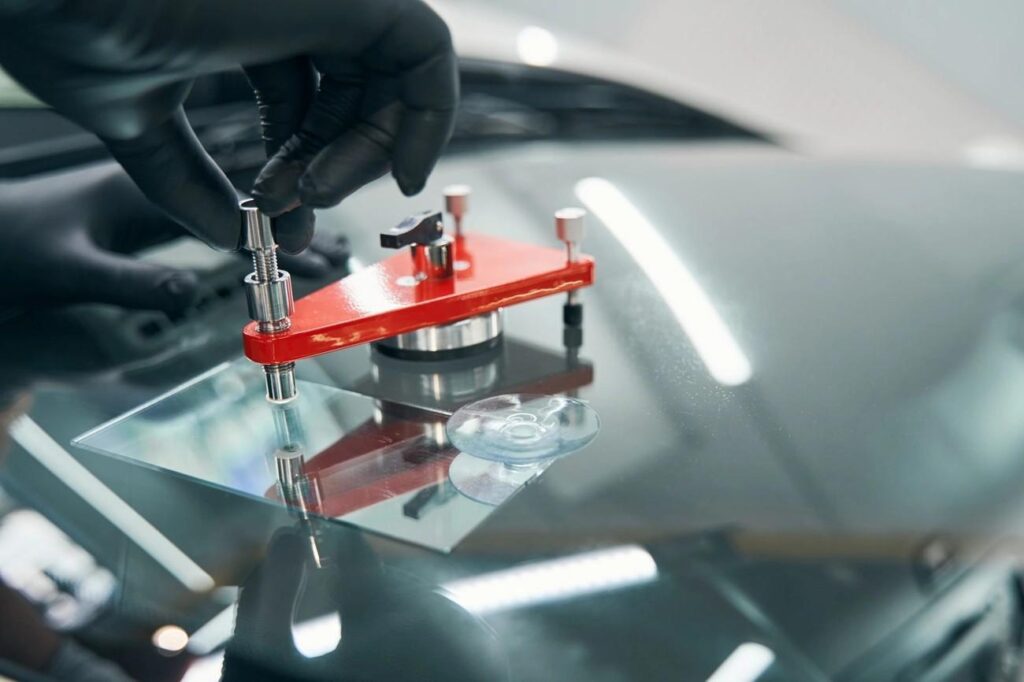
The decision to repair or replace your windshield comes down to a few simple factors that can save you time and money. A damaged windshield repair costs between $50 to $150, while complete replacements can cost $200 to $500 or more for luxury vehicles.
Many drivers feel confused about whether to repair or replace their windshield. Repair works best for minor damage – chips smaller than a quarter or cracks shorter than three inches. It also takes less than an hour to repair a windshield, but replacements need more time and resources. Your choice to repair instead of replace can save up to 20 kg of CO₂ emissions, which makes it better for the environment too.
This piece will help you figure out if repair or replacement makes sense for your situation. You’ll learn about safety concerns and how to find quality service. The right decision matters a lot for your safety and your wallet, whether you’re dealing with a small chip or a large crack.
When to Repair Your Windshield
You can save money and time by knowing whether to repair or replace your windshield. Quick repairs stop small damage from becoming major issues that need full replacement. Here are the key situations where repair makes the most sense.
Damage is smaller than a quarter
Small chips or cracks work well for repairs. Damage smaller than a quarter (about one inch in diameter) can be fixed with resin injection. Some services measure this differently – they accept chips up to the size of a loonie (approximately 1.5 inches). The rule for cracks states they should not be longer than six inches. Quick action on small chips stops them from growing into bigger, unfixable cracks.
Crack is not in the driver’s line of sight
The damage location plays a big role in whether repair is possible. The crack should be at least 30 cm above the steering wheel’s center and away from your field of vision. This matters because repairs can leave small distortions that might block your view if they’re right in front of you.
Only the outer glass layer is affected
Your windshield has three layers: outer glass, plastic middle, and inner glass. Repairs usually work only when the damage stays on the outer layer. The windshield needs replacement if the damage goes deeper into the structural layers.
There are fewer than 3 chips
Your windshield gets weaker with multiple damage points. Most repair shops can fix up to three chips. The windshield needs replacement for your safety if there are more damage points than this.
Windshield repair Surrey: local service options
Surrey drivers have good choices for windshield repairs. Expert Auto Glass Surrey provides fast professional fixes that stop cracks before they start. Drivers with comprehensive insurance can get free chip repairs through ICBC’s Windshield Repair Program. This program doesn’t have a deductible or affect future claims.
Note that quick action is vital – weather changes, moisture, and road vibrations can turn a small, fixable problem into major damage that needs complete replacement.
When to Replace Your Windshield
Your windshield might need more than a simple repair sometimes. You need to know the difference between repair and replacement options to stay safe on the road.
Crack is longer than 6 inches
A crack that runs longer than 6 inches (about the length of a dollar bill) needs replacement. These long cracks substantially weaken your windshield’s structure. You can’t rely on repairs for extensive cracks because they make the glass surface weak. The glass could fail without warning, especially during temperature shifts or heavy vibrations. Some shops might offer to fix longer cracks, but most experts agree that anything beyond this length needs complete replacement to keep you safe in a crash.
Damage reaches the edge of the windshield
Edge damage creates serious risks because this area connects to your vehicle’s frame and helps hold up the roof if you roll over. Small cracks that reach the edges can spread quickly from regular driving vibrations. This weakens the bond between glass and metal frame, and your windshield could pop out or shatter during a collision or after hitting a deep pothole.
Multiple cracks or chips are present
Several damaged spots on your windshield usually mean you need a replacement. The stress from multiple impact points makes the entire glass surface weak. Expert advice suggests that more than two or three damaged spots will compromise your windshield’s strength against future impacts. These cracks might look minor by themselves, but together they make the glass structure unsafe.
Damage affects both glass layers
Today’s windshields have three layers – outer glass, plastic middle (PVB), and inner glass. The glass needs replacement if damage goes past the halfway point through these layers. You can check by running your fingernail across both sides – feeling the crack on inside and outside means the glass isn’t structurally sound anymore.
Driver’s visibility is compromised
Clear visibility keeps you safe. Damage in your line of sight means you need a replacement because even professional repairs might leave small distortions that catch headlight glare. This becomes dangerous at night or in rain when tiny imperfections can temporarily blind you or hide obstacles ahead.
Safety and Legal Considerations
Beyond looks, windshield damage raises significant safety and legal concerns. You need to understand these factors to choose between repair and replacement.
Is it safe to drive with a cracked windshield?
A cracked windshield creates several serious risks. Your windshield gives you up to 45% of structural support in front-end collisions and 60% during rollovers. More than that, damaged glass can bend light and create dangerous prisms. These prisms can temporarily blind drivers at night. Damaged windshields can also make airbags deploy incorrectly, which reduces their ability to protect you.
Will a windshield crack spread over time?
Yes – cracks will almost always get bigger. Glass expands and contracts with temperature changes, which makes cracks worse. Water that seeps into cracks creates pressure and spreads the damage, especially in cold weather. Regular driving vibrations and road debris can turn small chips into major problems within days.
Vehicle inspection and legal compliance
Most provinces don’t allow driving with windshield damage that blocks your vision. Cars with substantially damaged windshields typically fail safety inspections. Tickets for cracked windshields can cost you $90-$175 plus extra fees.
Windshield repair or replacement: which is better for safety?
Complete replacement gives you the highest level of protection when there’s extensive damage. In spite of that, professional repairs can restore strength for minor damage while keeping structural integrity intact.
Choosing the Right Service and Glass Type
Your safety and satisfaction depend on choosing the right people to repair your windshield and the materials they use.
Certified technicians vs DIY kits
Professional windshield repairs give better results than DIY solutions. DIY kits cost between CAD 13.93 and CAD 27.87 but don’t have the right materials or expertise. Professional repairs cost from CAD 69.67 to CAD 209.00 per chip, and many insurance companies cover the full cost. Professional technicians use vacuum systems to remove moisture before they apply specialized resin. This creates a permanent bond that DIY methods can’t match.
OEM vs aftermarket glass
OEM (Original Equipment Manufacturer) windshields match exact vehicle specifications but cost more. Aftermarket glass (OEE – Original Equipment Equivalent) meets similar quality standards without the manufacturer’s logo. OEE windshields are the top choice in auto glass shops because they balance quality and cost well.
Auto glass repair Surrey: what to look for
Make sure your technicians have Auto Glass Safety Council (AGSC) certification. Good companies back their work with warranties and use quality materials. Look for ICBC-approved shops that handle claims smoothly.
Mobile windshield repair Surrey: pros and cons
Mobile services come to your home or workplace. You save time, choose where to meet, and get on with your day while repairs happen. The service location doesn’t matter much – what matters is picking a trusted provider.
Conclusion
The choice between fixing or replacing your windshield depends on safety, cost, and your vehicle’s specific damage. This piece shows that small chips and cracks are great candidates for repair. You can save hundreds of dollars while keeping your vehicle safe. But if the damage is too extensive, you’ll need a complete replacement to stay protected on the road.
Time plays a crucial role with auto glass damage. A small chip fixed right away might cost just $50 to repair. Leave that same damage untreated, and it could spread into a crack that needs a $500+ replacement. On top of that, professional repairs take less than an hour, so they fit most people’s schedules.
Your safety should be the main goal when making this choice. A windshield gives critical structural support during crashes. This becomes even more important during rollovers, where it adds up to 60% of cabin strength. Any weakness puts you and your passengers at risk.
Getting help from certified technicians to assess your situation is your best bet. While DIY kits are available, they don’t match professional work’s quality and durability. Most good shops give free inspections and can tell you whether to repair or replace.
You should talk to your insurance provider before starting any work. Many complete policies cover windshield repair at no cost, though replacements might need a deductible. Quick action on windshield damage keeps both you and your wallet safe for future drives.
Key Takeaways
Understanding when to repair versus replace your windshield can save you hundreds of dollars while ensuring your safety on the road.
• Repair for small damage: Chips smaller than a quarter and cracks under 6 inches can typically be repaired for $50-$150, compared to $200-$500+ for replacement.
• Replace for safety-critical damage: Cracks longer than 6 inches, edge damage, or multiple chips compromise structural integrity and require full replacement.
• Act quickly to prevent spreading: Temperature changes and road vibrations cause small chips to spread into major cracks within days, turning cheap repairs into expensive replacements.
• Choose certified professionals over DIY: Professional repairs use specialized equipment and materials that DIY kits cannot match, ensuring proper structural integrity and safety.
• Check insurance coverage first: Many comprehensive policies cover windshield repairs at no cost, while replacements may require paying a deductible.
Your windshield provides up to 60% of your vehicle’s structural integrity during rollovers, making the right repair decision crucial for both your safety and budget.
FAQs
Q1. When should I opt for windshield repair instead of replacement?
Repair is typically the best option for minor damage such as chips smaller than a quarter or cracks shorter than 6 inches. It’s also suitable when the damage is not in the driver’s line of sight and only affects the outer glass layer.
Q2. How long does a windshield repair usually take?
Windshield repairs are generally quick, often taking less than an hour to complete. This makes it a convenient option for most schedules compared to full replacements.
Q3. Is it safe to drive with a cracked windshield?
Driving with a cracked windshield can be dangerous. It compromises the structural integrity of your vehicle, potentially affects airbag deployment, and can create dangerous light distortions, especially at night.
Q4. Will my insurance cover windshield repair or replacement?
Many comprehensive insurance policies cover windshield repairs at no cost to you. Replacements might require paying a deductible. It’s best to check with your insurance provider before proceeding with any work.
Q5. Are professional repairs better than DIY windshield repair kits?
Professional repairs are generally more reliable than DIY solutions. Certified technicians use specialized equipment and materials that DIY kits cannot match, ensuring proper structural integrity and safety of your windshield.