

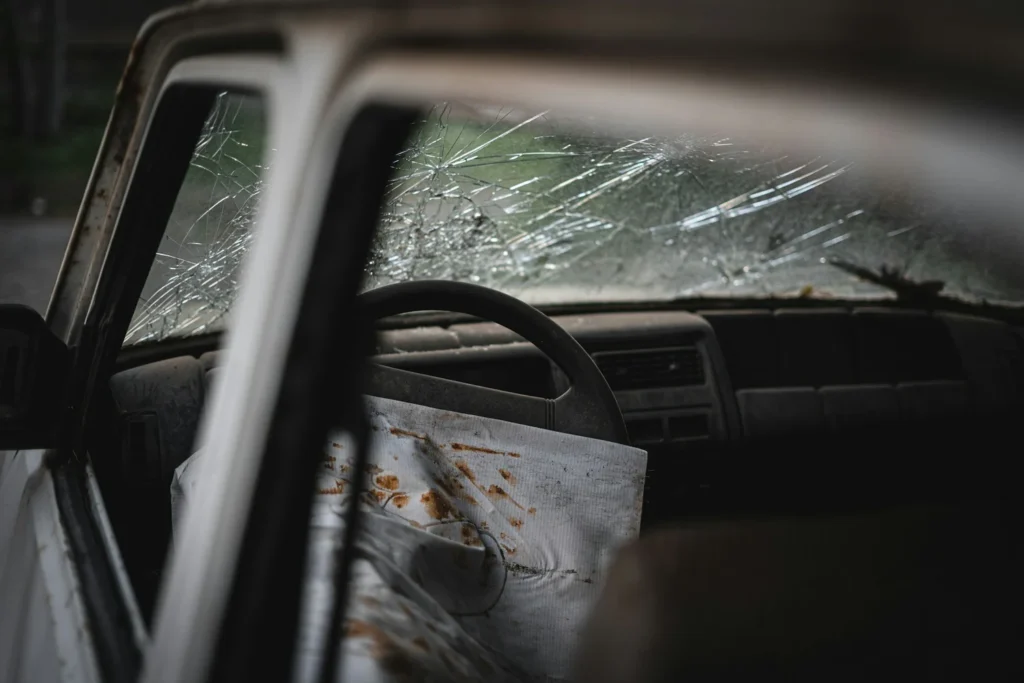
You’re running late for work, you hop into your car, and there it is — a crack creeping across your windshield that definitely wasn’t that big last week. The first question that jumps to mind: Can I still drive like this, or am I breaking the law?
It’s one of the most common questions BC drivers ask, and the answer isn’t a simple yes or no. Whether driving with a cracked windshield in British Columbia is illegal depends on the size, location, and severity of the damage — and how it affects your ability to see the road clearly.
This guide covers everything you need to know: BC law, the exact crack size limits, fines, how ICBC covers windshield damage, and when you need to repair or replace your glass.
What Does BC Law Say About Cracked Windshields?
British Columbia’s Motor Vehicle Act Regulations, Section 24.17(1), is crystal clear on this matter. It states that “a person must not use or operate a vehicle if the windshield or any window of the vehicle is in such condition that the vision of the driver is impaired.”
In simpler terms: if your windshield crack is large enough or positioned in a way that blocks your view of the road, you are legally prohibited from driving that vehicle.
The BC Motor Vehicle Act also specifically states that “the windshield or windows of a vehicle shall not be cracked, broken, clouded or otherwise damaged or defective so as to impair the vision of the driver.”
So, to answer the core question directly — it is not automatically illegal to drive with any crack. What makes it illegal is when that crack interferes with your line of sight or impairs driver visibility. The law focuses on safety impact, not just the presence of a crack.
However, this does not mean you can simply ignore windshield damage. Police officers have discretionary authority to ticket you if they believe your windshield poses a safety risk — even if the damage technically appears minor.
How Big Can a Windshield Crack Be Before It’s Illegal in BC?
While BC law does not set one universal measurement, enforcement is guided by vehicle safety inspection standards used by mechanics and law enforcement alike. Here are the specific thresholds that can trigger a penalty or a failed vehicle inspection in British Columbia:
- A crack over 300 mm (about 12 inches) long anywhere on the windshield
- More than two cracks over 150 mm (about 6 inches) long in any single piece of glass
- Any crack or chip that falls within the driver’s primary line of sight — roughly the area swept by the windshield wipers on the driver’s side
- Any damage that is spreading, spiderwebbing, or obstructing your forward view
A small chip on the far passenger corner? Likely fine. A long crack running across the driver’s side toward the center? That’s a legal problem waiting to happen.
The key principle here is this: location matters as much as size. A tiny chip directly in your line of vision is arguably more dangerous — and more legally problematic — than a longer crack at the very edge of the windshield.
What Are the Penalties for Driving with a Cracked Windshield in BC?
Being pulled over for windshield damage in British Columbia can lead to several outcomes depending on how serious the damage is:
1. Notice and Order to Repair The most common outcome. A police officer issues a written notice requiring you to repair the windshield within a specified period. This is not a criminal offence — it’s an administrative order that gives you time to fix the problem.
2. A Traffic Ticket / Fine Drivers in BC can face a fine ranging from $56 to $70 for operating a vehicle with a windshield that impairs visibility. While this may seem small, remember that a ticket on your record can still affect your insurance standing over time.
3. Vehicle Inspection Order If an officer considers your windshield genuinely unsafe, they can issue a vehicle inspection order. Your car must then be inspected at a designated facility before you can continue driving it legally. This means your vehicle could be declared unroadworthy until the damage is addressed.
4. Removal from Road In the most severe cases — where the windshield is so badly damaged it makes driving immediately dangerous — police have the authority to order your vehicle off the road entirely until repairs are made.
Beyond fines, there’s another critical risk: if you’re involved in an accident and your windshield was already damaged, that pre-existing condition can complicate your insurance claim and affect liability determinations.
Cracked Windshield and Vehicle Safety Inspections in BC
If your vehicle is due for a safety inspection — or is being inspected as part of a purchase, licensing, or police order — a damaged windshield can cause you to fail the inspection outright.
During a standard vehicle inspection in BC, inspectors assess windshield condition based on the safety standards outlined in the Motor Vehicle Act Regulations. Even minor imperfections in the wiper-swept area can result in an inspection failure, especially if the inspector determines the damage could worsen during adverse weather conditions like heavy rain or snow — both of which are extremely common in BC.
A failed inspection means your vehicle is considered unroadworthy until the problem is corrected and the vehicle passes re-inspection.
Why Windshield Cracks Are a Serious Safety Risk (Not Just a Legal One)
Many drivers treat a cracked windshield as a cosmetic annoyance — something to deal with eventually. But auto glass serves a far more critical role in your vehicle’s safety than most people realize.
Structural Integrity Your windshield contributes up to 30–45% of your car’s structural rigidity in a rollover accident. A cracked windshield is significantly weaker and may fail to provide adequate protection when it’s needed most.
Airbag Deployment Modern vehicles are designed so that the windshield works in conjunction with passenger-side airbags. During a collision, the airbag deploys toward the windshield before bouncing back to protect the passenger. A compromised windshield may shatter on impact rather than hold — potentially causing the airbag to deploy in the wrong direction.
ADAS (Advanced Driver Assistance Systems) If your vehicle is equipped with modern safety technology — lane departure warning, automatic emergency braking, forward collision alerts — these systems often rely on cameras mounted behind the windshield. A crack directly in the camera’s field of view can render these systems unreliable or completely non-functional.
Crack Progression This is perhaps the most overlooked risk. What starts as a small chip the size of a coin can spider outward into a full crack within days, particularly when exposed to:
- Temperature fluctuations (common in BC’s mountain regions)
- Bumpy road surfaces or potholes
- Vibrations from highway driving
- Rain, frost, or ice
Early repair costs a fraction of full replacement. Waiting always makes it worse.
Chip vs. Crack: What’s the Difference and Does It Matter Legally?
Yes — and the distinction matters both legally and practically.
A chip is a small piece of glass that has broken away from the surface, typically caused by a flying rock or gravel. Chips are generally small, localized, and may or may not be repairable depending on size and location.
A crack is a line fracture that extends across the windshield. Cracks are more likely to spread and are more likely to impair driver visibility, especially if they extend into the wiper-swept area on the driver’s side.
From a legal standpoint, BC law doesn’t specifically treat chips differently from cracks — both are evaluated based on whether they impair driver vision. However, chips that are smaller than a loonie (Canada’s $1 coin) in a non-critical area are far less likely to result in a fine or inspection failure than a long crack running across the driver’s side of the windshield.
Does ICBC Cover Windshield Repair and Replacement in BC?
Yes — but only if you have the right coverage. Here’s exactly how it works:
Basic ICBC Coverage
Standard basic ICBC insurance does not include windshield damage. If you only carry basic liability coverage, you will pay for windshield repair or replacement entirely out of pocket.
ICBC Comprehensive Coverage
If you have optional ICBC Comprehensive Coverage, windshield damage is typically included. Under this coverage:
- Chip repairs are completely free when the damage is smaller than a loonie, performed at an ICBC-approved Glass Repair Program facility, leaves no residual damage greater than ¼ inch in the driver’s line of vision, and there’s no pre-existing long crack that disqualifies the repair.
- Windshield replacements are covered, but you will need to pay your applicable deductible. A typical deductible for windshield replacement in BC is around $200, though this varies by policy.
The ICBC Glass Express Program
If your vehicle has only one piece of glass damaged (windshield, back glass, or a door window), many ICBC-approved glass shops can handle your claim from start to finish through the Glass Express Program — without you needing to contact ICBC directly. No appointment is necessary, and the shop invoices ICBC directly on your behalf.
Important: Will a Windshield Claim Raise Your Premiums?
A single windshield claim under ICBC Comprehensive Coverage is generally considered a no-fault claim and will not raise your insurance rates. However, multiple claims over a short period may be reviewed by ICBC.
When Should You Repair vs. Replace Your Windshield?
This is one of the most practical questions BC drivers face. Here’s a simple guide:
Repair is usually possible when:
- The chip or crack is smaller than a loonie in diameter
- The damage has fewer than three impact points
- The crack is shorter than 40 mm (roughly 1.5 inches)
- The damage is not in the driver’s direct line of sight
- The damage is not at the edge of the windshield (edge cracks tend to spread rapidly and weaken the seal)
Replacement is typically required when:
- The crack is longer than 40 mm or has spread across the windshield
- The damage is directly in the driver’s line of sight and cannot be repaired without leaving noticeable distortion
- The crack is at the windshield edge
- The windshield has multiple cracks
- The glass has been previously repaired in the same area
- The damage affects ADAS cameras or sensors mounted behind the glass
When in doubt, visit an ICBC-approved glass repair facility for a free damage assessment. They will tell you honestly whether repair is sufficient or whether replacement is the safer and legally compliant choice.
How to Handle a Cracked Windshield in BC: Step-by-Step
If you discover windshield damage on your vehicle, here’s what to do:
Step 1 — Assess the damage. Note the size, location, and whether it’s spreading. Is it in your line of sight? Is it near the edge of the windshield?
Step 2 — Avoid temperature extremes. Don’t blast hot air on a cold windshield or vice versa. Sudden temperature changes cause cracks to expand rapidly.
Step 3 — Check your ICBC coverage. Log in to your ICBC account or call your broker to confirm whether you have Comprehensive Coverage and what your deductible is.
Step 4 — Visit an ICBC-approved glass facility. Find a shop registered with ICBC’s Glass Repair Program. If the damage qualifies as a chip repair, it may be completely free. If replacement is needed, the shop will handle the ICBC claim directly.
Step 5 — Do not delay. A small chip that costs nothing to repair today can become a full crack requiring a $400–$900 replacement if left unaddressed.
Cracked Windshield Laws Across Canada: How BC Compares
It’s useful to understand how BC’s rules compare to other provinces, especially if you’re driving across provincial borders:
- Ontario focuses heavily on driver visibility, with law enforcement empowered to ticket any windshield damage that obstructs the driver’s view — similar to BC’s approach.
- Manitoba has clear and specific guidelines: any crack exceeding 20 cm (8 inches) is considered a violation.
- Quebec applies strict vehicle inspection protocols. Even minor imperfections in the wiper-swept area can result in inspection failures.
BC’s approach is primarily visibility-focused and enforcement-discretionary, meaning police officers assess each situation individually. This gives officers flexibility — but it also means you can receive a ticket even for damage that doesn’t technically exceed any specific size threshold if the officer deems it unsafe.
Frequently Asked Questions
Q: Can I drive with a small crack in the corner of my windshield in BC?
A: If the crack is small, not in your line of sight, and not spreading, you are unlikely to face immediate penalties. However, any crack can worsen quickly, so repair is always advisable.
Q: How much is the fine for a cracked windshield in BC?
A: Fines range from approximately $56 to $70 for driving with a windshield that impairs driver visibility under BC’s Motor Vehicle Act Regulations.
Q: Will a cracked windshield fail a vehicle inspection in BC?
A: Yes — a crack that impairs vision, is over 300 mm long, or falls in the wiper-swept area on the driver’s side can result in a failed safety inspection.
Q: Does ICBC cover windshield replacement in BC?
A: Yes, under optional Comprehensive Coverage. Small chip repairs are typically free through ICBC-approved facilities. Replacements require payment of your deductible (often around $200).
Q: Can police impound my car for a cracked windshield in BC?
A: In extreme cases where the windshield is severely damaged and poses an immediate safety risk, police can order your vehicle off the road until it is repaired.
Q: Does windshield repair affect my ICBC premium?
A: A single windshield claim under Comprehensive Coverage is generally a no-fault claim and does not increase your rates.
Final Verdict: Is It Illegal to Drive with a Cracked Windshield in BC?
The direct answer: it depends on whether the crack impairs your vision.
BC law does not make every windshield crack automatically illegal. What it prohibits — clearly and firmly — is operating a vehicle when windshield damage obstructs the driver’s ability to see the road safely. When that threshold is crossed, you risk a fine, a failed vehicle inspection, being ordered off the road, and — most importantly — a genuine risk to your own safety and the safety of everyone else on the road.
The smart, safe, and legally sound approach is to treat any windshield damage as something to address promptly. In BC, this is often easier and cheaper than drivers expect — particularly if you have ICBC Comprehensive Coverage, where chips can be repaired at no cost and replacements are covered with only a modest deductible.
Don’t wait for a small chip to become an expensive crack. Get it assessed by an ICBC-approved glass facility as soon as possible.