

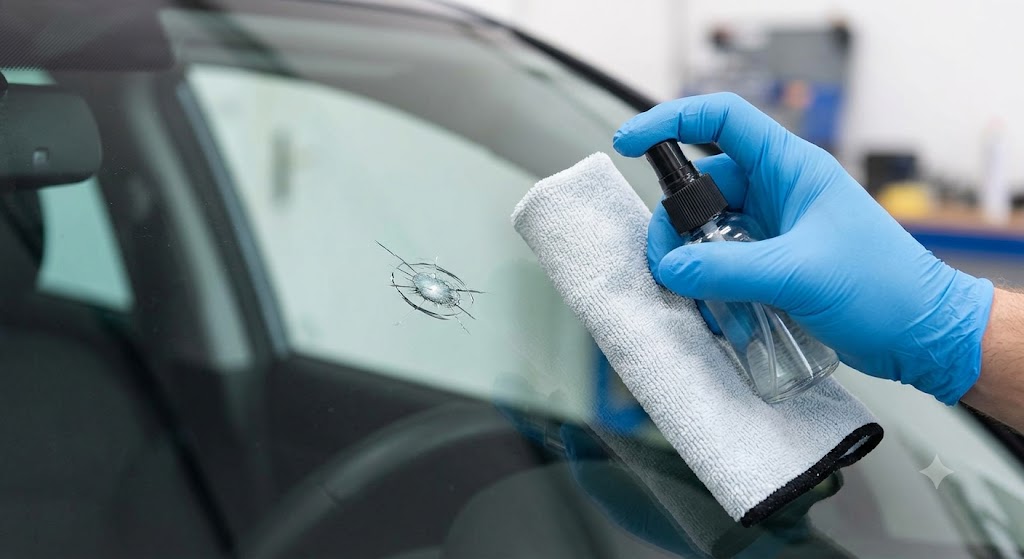
A tiny crack in your windshield might not seem urgent right now — but give it a week of cold mornings, highway vibration, and one hard door slam, and that hairline fracture can snake across your entire field of view. What starts as a $50 repair quickly becomes a $400–$800 full windshield replacement.
The good news? If you catch windshield damage early, you have real options: a careful DIY repair with a kit from your local auto parts store, or a fast professional fix that takes less than 30 minutes. This guide walks you through both — with honest advice on when each makes sense, what the process actually looks like step by step, and how to avoid the mistakes that turn a repairable crack into a write-off.
We’ve repaired thousands of windshields in Surrey and Vancouver. Everything in this guide reflects what we actually see in the shop — not recycled internet advice.
First: Can Your Windshield Crack Actually Be Repaired?
Before you reach for a repair kit or book an appointment, you need to answer one question: is the damage repairable, or does the windshield need to be replaced?
Not every crack qualifies for repair. Here’s the honest breakdown.
Repairs generally work when:
- The crack is shorter than 6 inches (roughly the length of a dollar bill)
- The chip or bullseye is smaller than a loonie in diameter
- The damage is not directly in the driver’s primary line of sight
- The crack has not spread to the edge of the windshield
- There is only one layer of glass affected — your windshield is laminated (two layers of glass with a plastic interlayer), and surface-layer damage is fixable
- The damage is not on a rain sensor or camera zone that sits behind the glass
Replacement is likely needed when:
- The crack is longer than 6 inches or has branched into multiple lines
- The damage starts or ends at the windshield’s edge — edge cracks spread fast and compromise structural integrity
- The crack runs through the driver’s line of sight and would cause visual distortion even after repair resin is injected
- You can feel the crack from outside with your fingernail, meaning it’s penetrated the outer layer deeply
- The glass has multiple cracks or a combination break — a star crack with an attached floater crack, for example
- Moisture or dirt has been sitting in the crack for weeks — contaminated cracks don’t bond well with resin
When in doubt, have a professional assess it before you try a DIY repair. Attempting to inject resin into a crack that actually needs replacement can make the damage worse and more expensive to fix.
Understanding Windshield Crack Types
Different cracks behave differently — and knowing which one you’re dealing with helps you decide on the right repair approach.
Bullseye crack — A circular chip with a cone-shaped impact point at the centre. Usually caused by a rock or piece of road debris. One of the easiest types to repair successfully.
Star break — A central impact point with cracks radiating outward like a star. Repairable if the overall diameter stays under about 35mm.
Half-moon (partial bullseye) — Similar to a bullseye but not fully circular. Generally repairable when small.
Floater crack — A crack that starts in the middle of the windshield rather than from an edge or impact point. Often caused by temperature stress. If it’s under 6 inches and stable, repair is usually possible.
Edge crack — Begins at the windshield’s edge. These are problematic because the edge of the glass bears structural tension — edge cracks spread quickly and almost always require full replacement.
Stress crack — Appears without any visible impact point, often after extreme temperature changes (a frozen windshield blasted with hot water, for example). These tend to spread and often need replacement.
Long crack — Any linear crack longer than 6 inches. Most shops won’t attempt repair on these; replacement is safer.
What You’ll Need for a DIY Windshield Crack Repair
If your damage qualifies for DIY repair, here’s what to gather before you start.
Windshield crack repair kit — Look for kits in the $15–$25 range that include a pressure-bridge injector system, not the cheap $5 squeeze-tube kits. Recommended brands include Permatex Windshield Repair Kit, Rain-X Windshield Repair Kit, and 3M Windshield Repair Kit. These come with a resin injector, applicator bridge or pedestal, curing strips, and a razor blade.
Windshield repair resin — Most kits include this. The resin is a UV-curable optical adhesive that bonds with the glass and restores structural strength. Do not substitute with super glue or nail polish for anything you intend as a permanent fix — those are emergency-only measures.
Microfiber cloths — At least two: one for cleaning, one for the final buff.
Rubbing alcohol or glass cleaner — For cleaning the repair area. Do not spray directly into the crack.
Razor blade or safety pin — For removing loose glass fragments and debris from the crack before applying resin.
UV light or direct sunlight — Required to cure the resin. A UV lamp speeds things up; natural sunlight on a clear day works fine.
Safety glasses and nitrile gloves — Resin can irritate skin and eyes. Crack edges can be sharp.
Step-by-Step: How to Fix a Crack in Your Windshield at Home
Follow these steps carefully. Rushing or skipping a step — especially cleaning — is the most common reason DIY windshield repairs fail.
Step 1: Park in a Shaded, Dry Location
This might seem counterintuitive since you need UV light later to cure the resin, but you should do the prep and injection in the shade. Working in direct sunlight heats the glass and causes the resin to start curing before it’s fully seated in the crack. A shaded spot keeps the glass cool and gives you working time.
The temperature should ideally be between 10°C and 30°C (50°F–86°F). Avoid doing a repair on a freezing morning or in extreme heat. If it has rained recently, the crack may have moisture in it — use a hair dryer on low heat held a few inches from the glass to draw out the moisture before proceeding.
Step 2: Clean the Damaged Area Thoroughly
Pour a small amount of rubbing alcohol onto a clean microfiber cloth — do not spray glass cleaner directly into the crack, as this pushes moisture and cleaning agents deeper into the damage.
Wipe the area around the crack carefully. If there are loose glass fragments or debris inside the crack, use a safety pin or the razor blade included in your kit to gently dislodge them. Do not push debris deeper.
Allow the area to dry completely before the next step. Any moisture or contamination trapped under the resin will cause the repair to fail — the resin won’t bond, and you’ll see white clouding or bubbles in the finished repair.
Step 3: Apply the Adhesive Patch and Pedestal
Peel the paper backing off the adhesive patch from your kit. The patch has a circular cutout in the middle — the crack or chip must fit within that cutout. If it doesn’t, your damage may be too large for this particular kit.
Centre the patch over the damaged area and press it firmly onto the outer surface of the windshield. Smooth out any air bubbles from the edges inward.
Now attach the pedestal (the plastic bridge with the upward-angled tube) to the adhesive patch. Press it down firmly so it seats flush.
Step 4: Inject the Windshield Repair Resin
Fill the syringe from your kit with the resin. Insert the syringe into the pedestal tube. Following your kit’s instructions, pull the plunger back to create suction — this draws air out of the crack and prepares it to accept resin.
Hold the suction for the time specified in your kit’s instructions (usually 1–3 minutes). You may see tiny air bubbles escaping from the crack — that’s exactly what should be happening.
After the suction phase, push the plunger down slowly to inject the resin into the crack. Apply steady, gentle pressure. You should only push about halfway down unless your kit specifies otherwise. Gently knock on the glass near the crack with your knuckles — this helps the resin flow into small crevices and releases any remaining trapped air.
If your crack has a small area that appears unfilled, carefully push the plunger a little further. Do not force it — you risk breaking the seal around the pedestal.
Leave the syringe in place with the resin applied for the time your kit recommends, typically 5–10 minutes.
Step 5: Remove the Injector and Apply the Curing Strip
Carefully remove the syringe, then gently detach the pedestal and adhesive patch. The crack should now be filled with resin.
Add a small drop of resin directly on top of the filled crack — this seals the entry point. Then apply the curing strip (a thin piece of plastic film) over the filled area. Press it down flat and smooth out any bubbles.
Step 6: Cure the Resin Under UV Light
Move your vehicle into direct sunlight, or position a UV lamp about 2–3 inches above the curing strip. Allow the resin to cure for the time specified in your kit, typically 15–30 minutes in good sunlight.
Do not skip this step or cut it short. The resin needs full UV exposure to harden completely. Undercured resin will remain soft and the repair will fail within days.
If you’re doing the repair on an overcast day, a UV lamp is necessary — sunlight through cloud cover is not reliable enough.
Step 7: Remove the Curing Strip and Polish
Once the resin is fully cured, do not simply peel the curing strip off — place your finger on top of the crack area and use the razor blade to break the bond around the perimeter of the strip. Then twist it off gently. Pulling straight up can dislodge the cured resin from inside the crack.
Use the razor blade at a perpendicular angle to the glass (90 degrees) to carefully scrape off any excess cured resin on the surface. Long, flat strokes work best.
Finally, buff the repaired area with a clean microfiber cloth to restore clarity. The repair should now be nearly invisible, and the crack should be fully sealed.
What to Do If You Don’t Have a Kit Yet (Temporary Measures)
If you’ve just noticed a crack and can’t get to an auto parts store immediately, here’s how to slow the damage down until you can properly repair it.
Clear packing tape — Press a piece of clear packing tape gently over the crack on the outside of the windshield. This keeps dirt and moisture out of the crack and prevents debris from contaminating it. It won’t stop the crack from spreading due to thermal stress, but it buys you time.
Avoid temperature extremes — Do not blast hot air from your defroster onto a cold cracked windshield, and do not pour hot water on a frosted windshield. Sudden temperature changes are the number-one cause of small cracks rapidly spreading.
Drive carefully — Avoid potholes, slamming doors, and highway speeds if possible. Vibration accelerates crack spread.
Nail polish or super glue — These can fill a chip temporarily and reduce contamination, but they are not resin — they don’t bond to glass the same way and will need to be removed before a proper repair is done. Use only if no other option is available.
How Much Does It Cost to Fix a Cracked Windshield?
Understanding the cost helps you decide between DIY, professional repair, and full replacement.
DIY crack repair kit
A quality windshield crack repair kit costs between $15 and $25 at Canadian Tire, AutoZone, Walmart, or any auto parts store. This is the cheapest option and works well for small chips and short cracks when done carefully.
Professional crack repair (shop or mobile)
Professional repair for a repairable crack or chip typically runs $50–$150 at an auto glass shop in BC. Mobile service may cost slightly more. The advantage is that a certified technician can assess the damage properly, use commercial-grade resin injected under controlled pressure, and guarantee the result. Most professional repairs are completed in 20–30 minutes.
Full windshield replacement
If the crack can’t be repaired, replacement costs range from $300–$600 for older vehicles without sensors, and $800–$1,500+ for newer vehicles with Advanced Driver Assistance Systems (ADAS) — cameras, lane-departure sensors, and heads-up displays that require recalibration after the glass is changed.
What Is ADAS Recalibration, and Why Does It Add to a Replacement?
If your vehicle was built after roughly 2016, there’s a good chance a small camera sits behind your rearview mirror, powering safety features like lane-departure warning and automatic emergency braking. When the windshield is replaced, that camera has to be recalibrated — even a fraction-of-a-millimetre shift in its position is enough to throw off how it reads the road. That’s why replacement quotes for newer vehicles often include an ADAS line item on top of the glass itself.
For a full breakdown of static vs. dynamic calibration, what it costs, and whether your insurance covers it, see our complete guide to ADAS calibration after windshield replacement.
With ICBC or comprehensive insurance
If you have comprehensive coverage with ICBC in BC, windshield chip repair is often covered at no cost to you, with no impact on your claims record. Crack repairs may also be covered depending on your policy. Always check with your insurer before paying out of pocket — you may be entitled to free or low-cost repair without affecting your premium.
DIY vs. Professional Windshield Crack Repair: Which Is Right for You?
| Factor | DIY Kit | Professional Repair |
| Cost | $15–$25 | $50–$150 |
| Time | 45–90 min | 20–30 min |
| Skill required | Moderate | None (for you) |
| Result quality | Good for small chips | Better, especially for cracks |
| Equipment | Basic consumer kit | Commercial-grade resin & tools |
| Damage assessment | You judge | Expert evaluates |
| Warranty | None | Most shops offer warranty |
| Insurance handling | You claim yourself | Shop handles paperwork |
Choose DIY if: the damage is a small chip (bullseye or star break under 25mm), you’re comfortable following detailed instructions, and cost is a primary concern.
Choose professional repair if: the crack is longer than a couple of centimetres, the damage is near your line of sight, you want a warranty on the repair, or you have ICBC coverage that makes professional repair free.
Is a Cracked Windshield Legal to Drive With in BC?
Not always. BC’s Motor Vehicle Act requires that your windshield not impair the driver’s view — and cracks in your direct line of sight, near the edge of the glass, or over a certain length can get your vehicle flagged during a roadside check or inspection. A small chip away from your sightline is usually fine short-term, but it’s a judgment call worth getting right.
For the specific size and placement thresholds BC uses, see our full guide on driving with a cracked windshield in BC.
How to Stop a Windshield Crack from Spreading
If you can’t repair the crack immediately, these steps significantly slow its progression.
Keep the temperature stable. The biggest enemy of a windshield crack is thermal shock — rapid temperature change. In winter, warm your car up gradually rather than blasting the defrost on high. Never pour hot water on a frost-covered cracked windshield.
Keep the crack dry. Water gets into cracks and, when it freezes, expands — which is how a 3-inch crack becomes a 12-inch crack overnight. Keep the crack covered with packing tape and park in a garage when possible.
Avoid pressure changes. Slamming doors creates a pressure wave inside the car that stresses the glass. Close doors gently until the crack is repaired.
Stay off rough roads. Potholes and gravel roads send vibration through the chassis and into the windshield frame. Highway vibration at sustained high speed also stresses a crack.
Act within 24–48 hours. Every hour a crack is exposed to the elements, road debris, and temperature changes, the harder it becomes to repair cleanly. Most cracks that could have been repaired professionally become replacement jobs because the owner waited too long.
Common Mistakes That Ruin a DIY Windshield Repair
Even careful DIYers make these errors. Knowing them in advance saves you a wasted $20 kit and a crack that’s now harder to fix.
Cleaning inside the crack with water. Water in the crack is the repair’s worst enemy. Always use rubbing alcohol on a cloth around the crack, never spray directly into it.
Skipping the suction phase. Many people rush straight to injecting resin. The suction step is what removes trapped air — without it, the resin can’t fully penetrate the crack, leaving voids that show as white bubbles.
Curing in shade or on a cloudy day without a UV lamp. Undercured resin looks fine initially but fails within days. If you don’t have direct sunlight, use a UV lamp.
Pulling the curing strip straight off. This pulls resin out of the crack with it. Always break the bond with a razor blade first, then twist the strip off.
Trying to repair a crack that’s too large. If the crack is longer than your kit’s patch can cover, the repair simply won’t work. A failed repair attempt doesn’t just waste your money — it can contaminate the crack with resin, making professional repair harder.
Repairing in freezing temperatures. Resin becomes viscous and doesn’t flow properly when the glass is cold. The repair will look fine but won’t have bonded correctly. Bring the car into a warm garage for at least an hour before attempting a repair in winter.
When to Absolutely Call a Professional
There are situations where DIY repair is the wrong call — not just suboptimal, but potentially unsafe.
If the windshield crack is in your primary line of sight, a professional repair using commercial-grade resin and controlled injection pressure produces a clearer result than a consumer kit can. Distortion in your line of sight after a poor repair is a safety hazard.
If the crack is within 5cm of the windshield edge, only a professional can properly assess whether the structural integrity of the glass allows for repair or whether replacement is the only safe option.
If your vehicle has rain-sensing wipers, a heads-up display, or a front-facing camera mounted at the top of the windshield, the repair zone is close to sensitive equipment. Professional repair ensures these systems aren’t disturbed, and if replacement becomes necessary, the technician can handle ADAS recalibration.
If you’re in BC and have ICBC coverage, calling a certified shop costs you nothing — there’s no reason to risk a DIY repair when professional service is effectively free.
After the Repair: What to Expect
Whether you’ve done a DIY repair or had it done professionally, here’s what to expect in the hours after.
Don’t wash the car for at least 24 hours. Water pressure from a car wash can compromise the bond before it has fully cured and settled.
Don’t use the windshield wipers on the repair area for a few hours. Let the surface resin set completely first.
The crack may still be slightly visible. A windshield repair restores structural integrity and prevents further spreading — it does not make the glass look brand new. Most repairs reduce the visual appearance of the crack by 70–90%, but a faint line often remains. If cosmetic perfection is a priority and the crack is in your line of sight, replacement is the only way to achieve it.
Check the repair after a few days. Run your fingernail lightly across the surface. It should be completely smooth. If you feel any texture or the crack appears to be spreading beyond the repaired area, call a professional to assess it.
Frequently Asked Questions
How big of a crack can be repaired on a windshield?
Most professional shops and consumer kits can successfully repair cracks up to 6 inches (about 15cm) in length, and chips up to the diameter of a loonie. Beyond that size, or if the crack has branched into multiple lines, replacement is usually the safer and more cost-effective option.
How long does windshield crack repair take?
A DIY repair takes about 45–90 minutes including setup and curing time. A professional repair at a shop or with mobile service typically takes 20–30 minutes, with most of that time being the curing process.
Does windshield crack repair really work?
Yes — when done on appropriate damage (the right size, location, and crack type) and performed correctly, resin injection is a proven and durable repair method. Professional repairs on qualifying damage come with a warranty. DIY repairs on small chips work well when the instructions are followed carefully.
Is it safe to drive with a cracked windshield?
A small crack away from your line of sight may be tolerable for a short period, but driving with windshield damage is always a risk. Cracks reduce the structural integrity of the glass, which contributes to roof protection in a rollover and proper airbag deployment. In BC, a crack that significantly impairs the driver’s view can result in a vehicle inspection fail and a fine. Get it assessed as soon as possible.
Will insurance cover a cracked windshield repair?
If you have comprehensive coverage with ICBC in BC, chip repair is typically covered at no cost. For crack repair, coverage depends on your policy. Many insurance providers (ICBC, BCAA, Intact) cover repair costs fully or partially. We recommend calling your insurer before paying out of pocket — you may be paying for something that’s already covered.
Is the crack still visible after a windshield repair?
Usually there is some faint visual evidence remaining, though the crack is fully sealed and sealed against spreading. In most cases it’s barely noticeable unless you’re looking for it. If the crack is in your line of sight and visibility is important to you, replacement delivers a perfectly clear result.
Can I repair a windshield crack in cold weather?
You can, but it requires extra steps. The glass should be warmed up — bring the car indoors for at least an hour if possible. Cold glass makes the resin thick and harder to inject. Professional shops use heated resin and controlled environments, which is why cold-weather repairs are better left to a technician.
What happens if you don’t fix a cracked windshield?
Cracks always get worse over time. Road vibration, temperature changes, and pressure from closing doors cause cracks to spread. What could have been a $75 repair today can become a $600 replacement within weeks. Beyond cost, an unrepaired crack compromises the structural role the windshield plays in your vehicle’s safety system.
The Bottom Line
A cracked windshield is one of those problems that rewards fast action. Caught early — within the first day or two — most chips and short cracks can be fixed with a $20 kit or a quick professional repair. Leave it, and you’re looking at a full replacement.
If you’re doing it yourself: take your time, don’t skip the cleaning and suction steps, and make sure the resin cures fully in UV light. For anything longer than a couple of inches, in your line of sight, or near the windshield’s edge — let a professional take a look.
If you’re in Surrey or Vancouver and need an honest assessment of whether your windshield can be repaired or needs replacement, Expert Auto Glass offers same-day appointments, mobile service, and full ICBC claim handling. Most chip repairs are completed in under 30 minutes, and if you have ICBC comprehensive coverage, the repair is often free.
Don’t wait for a small crack to become a big problem.