

Ever noticed a small chip in your windshield and wondered if you just need to replace it right away? Windshields are not just glass barriers – they’re vital safety components that protect you from environmental elements and provide structural support to your vehicle. A small crack can put your safety at risk if you leave it untreated.
Your windshield’s visible damage is one of the obvious signs that just needs immediate attention. A minor chip can get substantially worse from road vibrations or temperature changes. This simple fix can get pricey if you wait too long. Small cracks or chips that spread across your windshield signal that you might need a replacement. This is a big deal as it means that the damage is larger than a dollar bill or shows up near your windshield’s edges.
This piece will help you spot key signs that tell you when to replace your windshield instead of repairing it. Quick action matters – not just to save money but to keep you safe on the road.
Visible Signs You Shouldn’t Ignore
You can avoid dangerous driving conditions and pricey repairs by knowing the warning signs of severe windshield damage.
The damage size tells you if you need a replacement. A crack over three inches or chips bigger than a quarter usually means you’ll need a full windshield replacement instead of simple repairs. Multiple chips or cracks, whatever their size, often mean you need a complete replacement because they substantially weaken the glass structure.
The damage location plays a huge role. Cracks reaching the glass edges are especially worrisome since these areas provide vital structural support. Your windshield’s driver-side damage creates dangerous visibility problems that need immediate attention. Damage in the wiper’s path can quickly get worse during regular use.
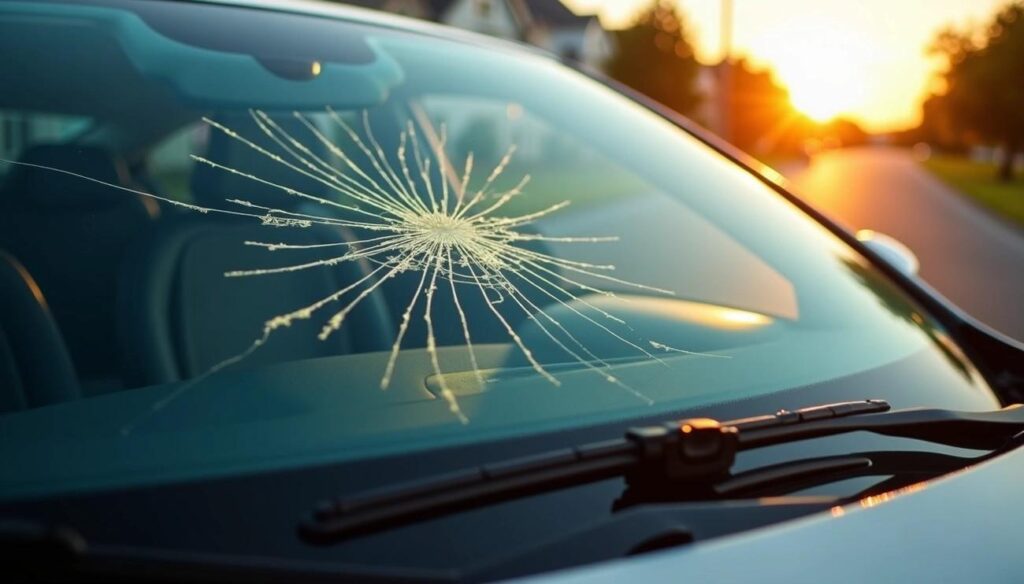
Watch out for specific damage patterns too. Spider web cracks that spread from a central point, stress cracks that show up without impact, and combination breaks all mean you need a full picture from professionals. White haze along crack lines shows water has seeped into the glass layers – at this point, repairs won’t help.
Small chips shouldn’t be ignored. They can spread faster due to temperature changes, road vibrations, or extra stress from driving. Putting off the work to be done increases safety risks and could cost you more money later.
Hidden Issues That Signal Trouble
Your windshield might have serious problems that aren’t obvious cracks or chips. Hidden issues lurk beneath the surface and can spell real trouble.
Tiny indentations across the glass surface, known as windshield pitting, often escape notice until dangerous conditions develop. Sand, dust, and road debris create these microscopic divots over time. The damage leads to a hazy appearance and makes glare much worse, particularly at night or in direct sunlight. These small marks may seem minor, but they substantially affect your visibility and wear down your windshield’s structural integrity as time passes.
There’s another reason to worry – seal failure. Rain or car washes might let water seep into your vehicle, which points to a bad windshield seal. Your windshield might also have issues if fog or condensation takes longer than usual to clear up, as this shows moisture trapped in the cabin. Left unchecked, this trapped moisture can breed mold and damage your car’s electrical systems.
Optical distortion poses yet another hidden risk. Your windshield might have serious alignment problems if straight lines look wavy or you see double while driving. This isn’t just about looks – the distortion can cause headaches, strain your eyes, and make it hard to judge distances correctly.
Pay attention to sounds too. High-speed driving that produces whistling noises often reveals small cracks or poor installation. Your vehicle’s structural integrity might be at risk even without visible damage to the windshield.
When Windshield Damage Affects Safety Systems
Modern vehicles depend on complex safety systems that windshield damage can compromise. Your windshield does more than block wind and rain – it works together with many safety features to protect you.
Your passenger-side airbag system needs a strong windshield to work properly. These airbags use the windshield as support before they cushion passengers. A damaged windshield might break during impact, which lets the airbag inflate outward instead of protecting the occupant. Safety tests show this can reduce the airbag’s effectiveness by up to 40% in severe crashes.
Your windshield also provides vital structural support to your vehicle. It adds up to 45% of cabin strength in head-on collisions and about 60% if your car rolls over. A small crack can weaken this support and your roof might collapse during an accident.
Windshield damage also affects Advanced Driver Assistance Systems (ADAS). Lane departure warnings, automatic emergency braking, and adaptive cruise control use cameras and sensors mounted on the windshield. Cracks or chips can throw these sensors off balance, which leads to wrong readings or system failures. You need to recalibrate these systems after replacing your windshield to restore their safety features.
A seemingly minor crack can create major safety risks. You should replace your windshield right away if these safety systems are affected.
Conclusion
A windshield does much more than keep weather elements away from you. This vital safety feature needs quick repairs at the first sign of damage. Without doubt, putting off windshield replacement puts you at risk and could lead to more expensive fixes later.
Small chips can turn into dangerous cracks faster than you might expect as you drive. Daily conditions like temperature changes, road vibrations, and normal stress make it worse. Quick action when you spot the original damage helps stop these problems from growing.
Your safety depends on having a solid windshield. Your car’s structure, airbag system, and driver assistance features rely on a working windshield. Small cracks can make airbags 40% less effective and weaken your car’s cabin during crashes.
Damage you can’t see is just as risky as visible cracks. Tiny pits create dangerous glare, and broken seals let moisture seep inside. Your eyes strain to adjust and you might misjudge distances when the glass has optical flaws.
Next time you see windshield damage, take these warning signs seriously. Don’t wonder if repairs can wait – ask yourself if risking your safety is worth it. Your windshield protects more than your view – it keeps everyone in your car safe, especially you and your passengers.
Key Takeaways
Understanding when your windshield needs immediate replacement can prevent dangerous driving conditions and protect your safety on the road.
• Replace windshields with cracks longer than 3 inches or chips larger than a quarter – size and location determine repair vs. replacement needs • Hidden damage like pitting, seal failure, and optical distortion creates serious safety risks even without visible cracks • Windshield damage compromises airbag effectiveness by up to 40% and can disable critical ADAS safety systems • Act immediately on any windshield damage – temperature changes and road vibrations rapidly worsen minor chips into major safety hazards
Your windshield provides up to 60% of your vehicle’s structural strength during rollovers and serves as a crucial backstop for airbag deployment. What appears as minor damage can quickly escalate into life-threatening safety risks, making prompt professional assessment essential for protecting yourself and your passengers.
FAQs
Q1. How can I tell if my windshield needs immediate replacement?
Look for cracks longer than 3 inches, chips larger than a quarter, or damage near the edges of the windshield. Also, watch for hidden issues like pitting, seal failure, or optical distortions that affect your vision while driving.
Q2. Is it safe to drive with a cracked windshield?
It’s not recommended. Even small cracks can compromise your vehicle’s structural integrity, affect airbag deployment, and interfere with advanced driver assistance systems. For safety reasons, it’s best to address windshield damage promptly.
Q3. How does windshield damage affect my car’s safety systems?
Windshield damage can reduce airbag effectiveness by up to 40% and interfere with the functioning of advanced driver assistance systems (ADAS) like lane departure warnings and automatic emergency braking.
Q4. What are some hidden signs that my windshield needs replacement?
Watch for windshield pitting causing increased glare, water leaks indicating seal failure, persistent fogging, optical distortions making straight lines appear wavy, or whistling sounds at high speeds.
Q5. How quickly should I replace a damaged windshield?
You should replace a damaged windshield as soon as possible. Even minor chips can rapidly expand due to temperature changes, road vibrations, and everyday stress from driving, potentially leading to more severe damage and increased safety risks.